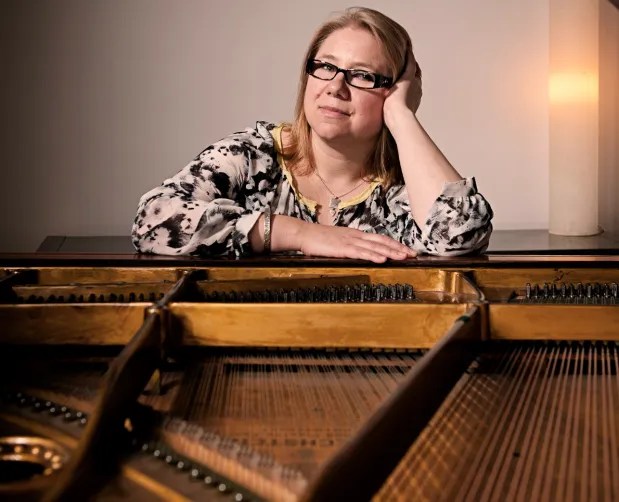
Author F M Wilson talks about music, writing, Dorset and Malbec….
Music has been a significant part of your life for many years. What are your earliest musical memories, and when did you first begin playing the piano?
There was always music at home – on the radio, my parents’ extensive collection of LPs, my father playing the clarinet…. I remember being taken to concerts from an early age, and I began piano lessons when I was five or six. At that time (early 1970s) I had a rather old-fashioned piano teacher and I found the lessons quite dull, but I stuck at it, and a change of teacher when my parents moved to Hertfordshire gave me the stimulation to continue through all my grade exams.
What was the original spark behind Facing the Music? Was there a particular piece of music, historical event or personal experience that first set the novel in motion?
I started writing this book nearly 25 years ago, as a kind of distraction, and, to be honest, I can’t actually remember why I started it. Only that I heard Beethoven’s ‘Spring’ Sonata for piano and violin, and it seemed to convey something of the innocence and hope of youth. I also wanted to write about music, and the experience of playing music, rather than simply listening to it (this was some years before I started writing my blog The Cross-Eyed Pianist).
When I revisited the text in 2026, I realised that there was something worth salvaging/revising. By this point, I’d been writing about music professionally for over 15 years (through my blog and through other writing including concert reviews, programme notes and articles for magazines and journals), and had spent 12 years teaching piano. I’ve also interviewed countless professional musicians and composers for my Meet the Artist series (over 2150 interviews to date) and met many at concerts and other events. I felt I had gained far greater insight into the creative life of musicians and could now write about what it means to “be a musician” with more authority and experience.
The principal characters in Facing the Music are a pianist and a violinist. Why did you choose those two instruments, and what does chamber music reveal about friendship, trust and collaboration that no other relationship could?
Given that the ‘Spring’ sonata was the original impulse for Facing the Music, they had to be a pianist and a violinist. Playing chamber music encourages collaboration and cooperation, give-and-take, and the ability to ‘read’ and trust the other person/persons, and I have met many chamber musicians who are also good friends outside of their professional partnership.
The First World War has been the subject of countless novels. What drew you to this conflict, and what did you hope to explore that goes beyond the familiar stories of mud, trenches and remembrance?
I’ve been fascinated by the First World War and its literature since my teens, and have visited the Somme battlefields several times. However, I didn’t want Facing the Music to be another novel about the horrors of the First War. But I needed a scenario that would take the protagonists completely out of their comfort zone and provide a stark contrast to the vibrant and rather rarefied world of classical music and concerts. The war section isn’t really about the war per se; it is, I hope, more an exploration of what happens when people are plunged into very challenging circumstances over which they have little or no control, and whether it is possible to retain a sense of one’s self, and, in the case of my characters, their artistic identity, in such circumstances.
Although Facing the Music is firmly rooted in the years 1914–1919, many readers may recognise parallels with more recent events. Did writing about lives disrupted by war, isolation, uncertainty and recovery take on a different meaning in the aftermath of the COVID-19 pandemic?
I do think the experience of COVID-19 and the lockdowns is present in the background of Facing the Music.
I spoke to a number of professional musicians during the Covid lockdowns in the UK. Initially, many welcomed the break from performing and travelling, seeing it as an opportunity to practise and learn new repertoire, and have some time to rest and reset. But without the focus of concerts, for many musicians spare time became an affliction rather than a gratification, and they felt bereft without the opportunity to work with colleagues, perform and share their music with live audiences. Many felt a sense of dislocation without live music, and some doubted whether they could return to concert-giving after the pandemic. For people whose lives and activities are so closely linked to their art, not being able to engage in one’s art can feel like an attack on one’s whole being.
Dorset is far more than a backdrop to the novel. It is portrayed as a place of freedom, healing, memory and belonging for your characters. What is it about Dorset that made it such an important part of their story?
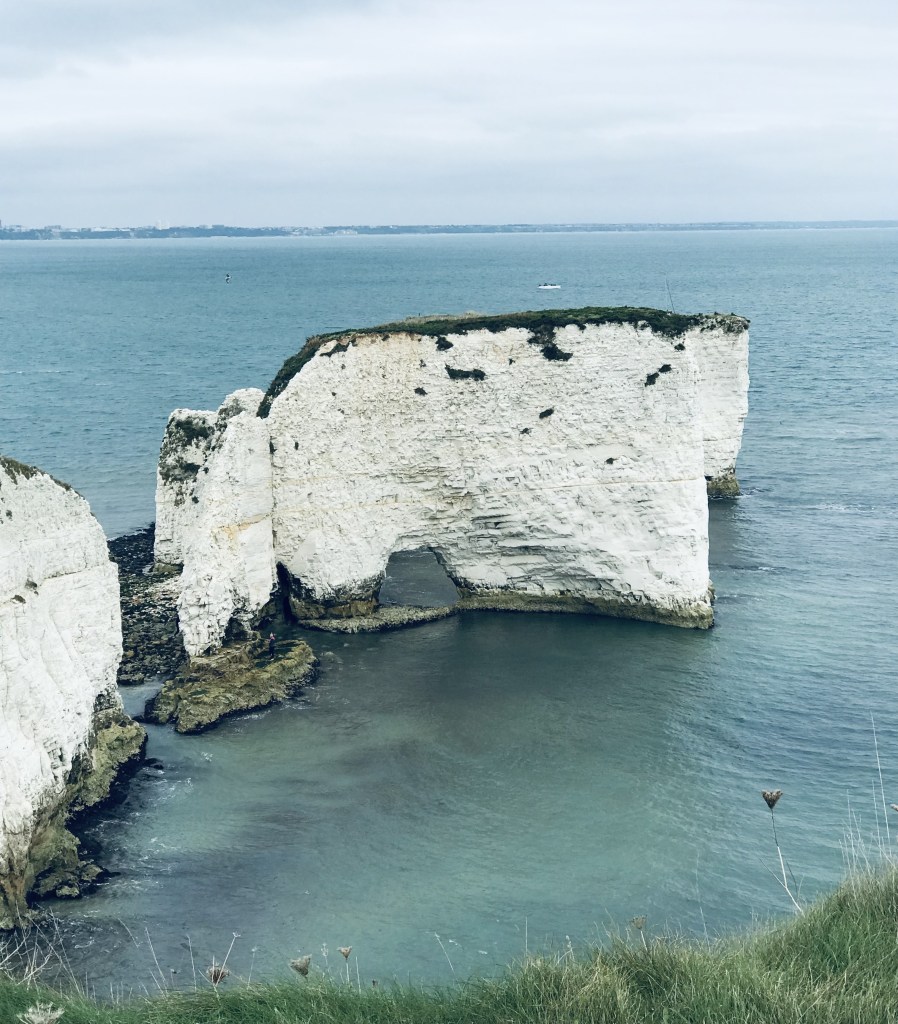
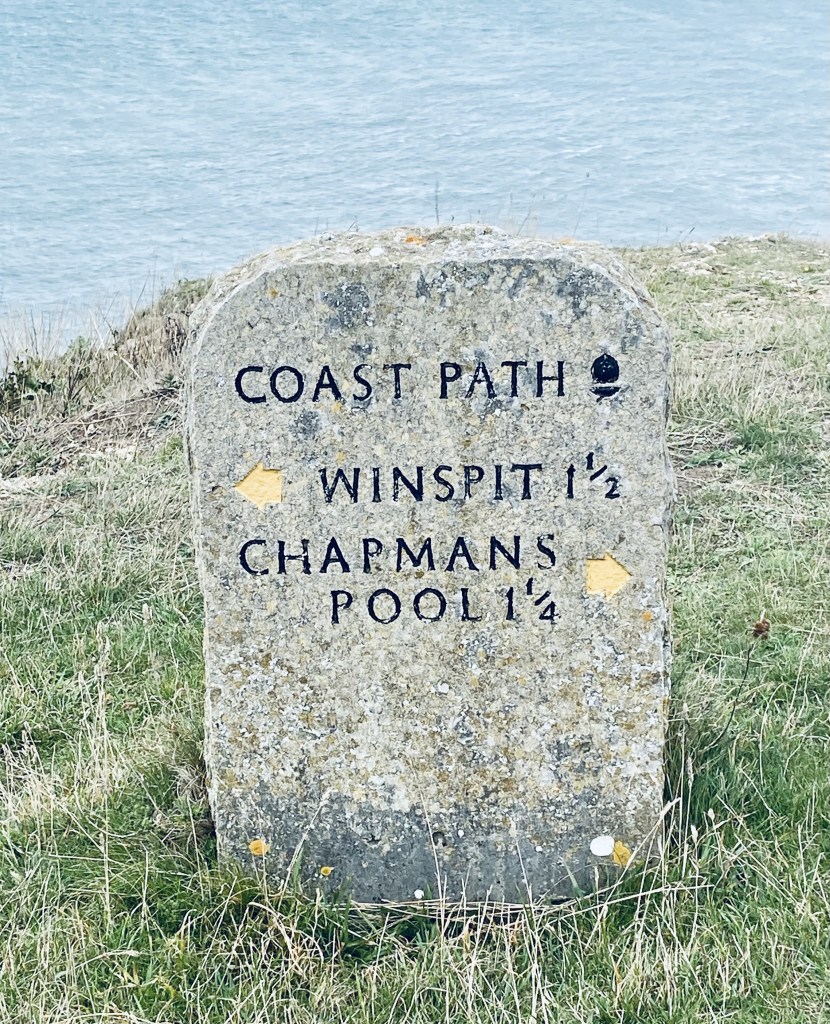
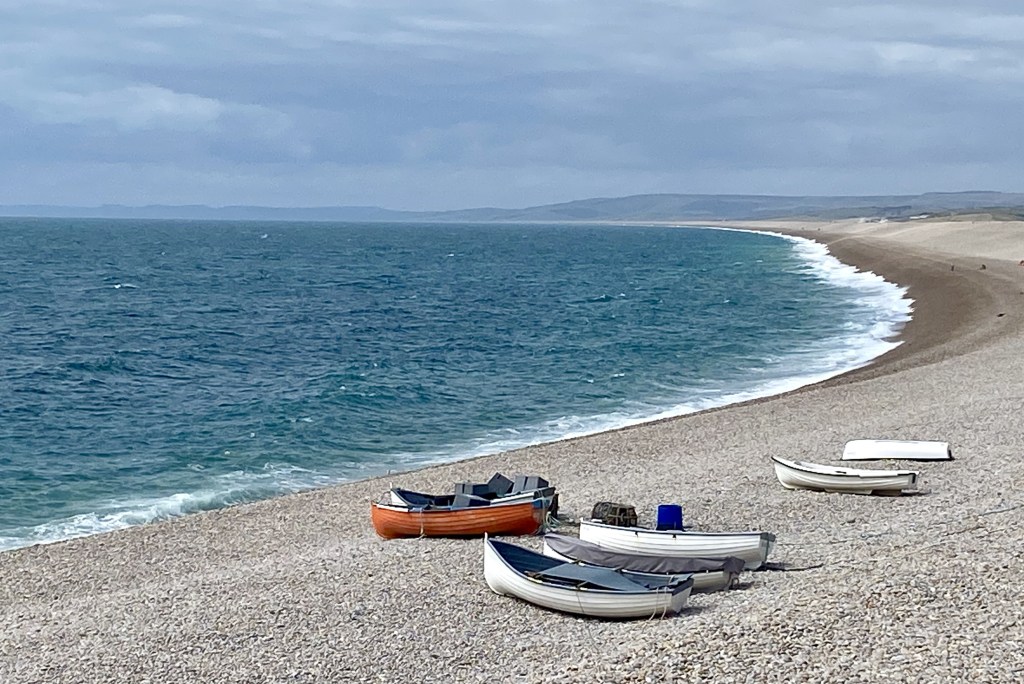
I have had an association with and affection for Dorset for nearly forty years through my husband and his family, and I moved to the county in 2018 after some 30 years in London. It has always felt like a place of escape and restoration for me, especially the coast. I wanted my characters to have a place they could retreat to, completely different to their busy lives in London, and later, after the war. At the start of the book, it is where the two main characters really forge their friendship outside of music: they discover other shared interests, and the memory of these activities becomes more important as the narrative progresses. Dorset and the unchanging nature of the landscape there act, in a way, as both an anchor and a place of sanctuary and recovery for the characters.
One of the greatest challenges in fiction is writing convincingly about music – a profoundly emotional art that leaves no physical trace once the final note has faded. How did you approach describing performances and musical experiences without reducing them to technical commentary?
As I said earlier, my experience of playing music, attending concerts, and writing about music has, I hope, enabled me to write about it in a non-analytical or academic way. One of the greatest compliments I have received about my concert reviewing is “it felt like I was at the concert with you”, so I do feel I can convey the emotional experience of music. But I also wanted to write about the physical “feel” of certain pieces under the hands – and this becomes more significant later in the book – so I have tried to include piano music that I have played myself and/or know well (for example, Schubert’s Opus 90 Impromptus, Beethoven’s piano sonatas, works by Debussy) to understand both the physical and emotional demands, and the pleasures and the challenges of specific pieces. Certain pieces also have an emblematic or metaphysical place within the narrative.
The music of Beethoven has a special place in Facing the Music. What is it about his music that speaks particularly strongly to you, both as a pianist and as a writer?
I have loved the music of Beethoven since I was a child. There is something life-affirming and indomitable about this music and the personality that animates it. The piano sonatas and the duo sonatas for piano and violin, for example, offer fascinating insights into his compositional development over the course of his life. And as a pianist there is so much to explore in his music – the textures, the variety, the way he responded to the development of the piano, the breadth of his imagination…. The Fourth Piano concerto is my favourite concerto by Beethoven, or indeed anyone else!
Are there particular composers or works to which you return at important moments in your life?
Beethoven is never far away from my piano, neither is Schubert, and I often think I could happily spend the rest of my life playing only the music of these two composers. Bach has always been there too – from pieces such as the two- and three-part Inventions one learns as a junior piano student to the keyboard Partitas and Suites, and of course the WTC. Debussy has also been there for as long as I can remember.
As I’ve got older, I’ve come to love the music of Chopin, Schumann, Liszt, Brahms and Rachmaninoff. And when I was studying for my first performance diploma, I encountered Olivier Messiaen’s piano music for the first time and fell in love with it.
Has your relationship with the piano changed as you have grown older?
Yes, I’ve become much more relaxed about practising! Joking apart, as an amateur pianist I feel it’s important to enjoy the piano above all else. And if I don’t practise from one day to another, it’s not the end of the world. Interestingly, revising the novel sent me back to the piano after many months of absence, and now I play/practise most days.
Memory, mentorship and artistic inheritance run throughout the novel. Do you think musicians carry their teachers with them throughout their lives, and was that one of the ideas you wanted to explore in the book?
Undoubtedly. I know that many musicians carry their teachers with them, and some set great store by the heritage of their teachers. The pianist/teacher Phyllis Sellick, for example, could trace a line back to Chopin through her teachers and grand-teachers, and I think this sense of legacy is very important – the passing on of wisdom and experience down the ages. But aside from that, most of us will remember our piano teachers from childhood and beyond, and those connections can be very important. I have very strong memories of my piano teachers, both as a child and adult, and also my music teacher at secondary school who was an important influence on my musical development. I do not believe we learn music in isolation and the interaction with different teachers and mentors can be one of the most significant and rewarding aspects of being a musician.
Who have been the most important teachers and mentors in your musical life, and what have you carried with you from them?
The piano teacher I had during my teens (Suzette Murdoch, in Rickmansworth) and the music teacher at my secondary school (Christopher Weaver) were both important influences. Both taught with imagination, encouragement and enthusiasm, and my piano teacher never told me that certain repertoire was off limits. When I arrived at a lesson with a copy of Schubert’s Op 90 Impromptus when I was 12 or 13, she helped me navigate music which was largely too advanced for me at the time; I’ve never forgotten that encouragement.
As an adult returner, I was fortunate to be taught, for the most part, by Penelope Roskell, a sympathetic and highly skilled teacher who helped me overcome my performance anxiety, taught me confidence, and cured me of many bad technical habits acquired during my teens. And like Mrs Murdoch, she encouraged me to explore repertoire outside my comfort zone or repertoire that I previously thought was out of reach because my hands weren’t big enough. (Rachmaninoff and Liszt). I have encountered many other teachers through piano courses and masterclasses and all have given me important food for thought, both for my own playing and my teaching. I particular value those who teach in a non-didactic way and who encourage curiosity – crucial for the musician.
Readers may come to Facing the Music expecting a war novel, a love story or a novel about music. How would you describe it, and what do you hope people will take away from it after they turn the final page?
Facing the Music is fundamentally a love story – love between people and love of music, and it reflects my own love of classical music. I hope readers will appreciate this, but also gain some insight into the working lives of professional musicians and what motivates them, and the notion of artistic identity.
Which writers and musicians do you most admire?
I have long admired the writing of Ian McEwan, Helen Dunmore, Maggie O’Farrell, Paul Theroux, Kazuo Ishiguro, and William Boyd.
I admire pianists in specific repertoire, for example Mitsuko Uchida and Maria Joao Pires in Mozart and Schubert, Murray Perahia and Piotr Anderszewski in Bach, Pierre-Laurent Aimard in Debussy and Messiaen, Igor Levit in Beethoven, Sir Stephen Hough in anything he turns his hand to….!
Away from music and writing, what provides you with inspiration?
I live in a rather striking part of Dorset, the Isle of Portland on the Jurassic Coast, with views to Chesil Beach from my house. The changing weather here and the countryside in this part of Dorset provide inspiration and restoration. I also enjoy cooking, gardening, and the company of good friends.
What is your idea of perfect happiness?
Family and friends around my dinner table, good food and wine, and plenty of lively conversation.
Playing Schubert’s Fantasie D940 with my best piano chum after drinking several glasses of Malbec.
In the stalls at the Wigmore Hall, listening to Beethoven or Schubert.
What advice would you give to someone wishing to sustain a creative life?
Just do it. And don’t compare yourself to others. As Theo says to his piano student Peter in the final section of the book “It’s far more important – and honest – to recognise the value of what we have to say and to measure it against the music.” I think this applies across creative disciplines.
Facing the Music is published by Nine Barrow Press and available in paperback and eBook from Amazon.
F M Wilson is a publicist, writer and pianist. She is the creator and editor of The Cross-Eyed Pianist, one of the UK’s leading websites devoted to classical music and the piano. Find out more here